
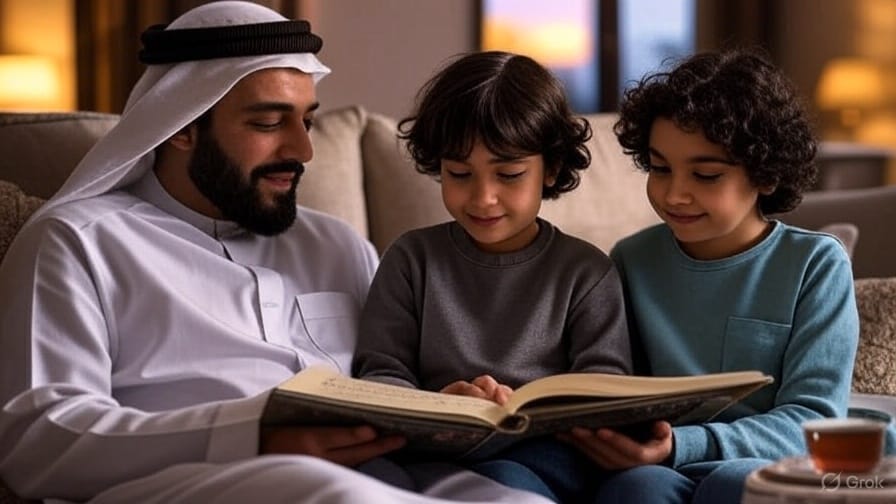
Imagine this: A mother, living in a non-Arabic-speaking country, watches her five-year-old daughter struggle to recognize the Arabic alphabet. She feels helpless — torn between her busy life and the deep desire to preserve her child’s cultural identity. If this resonates with you, you’re not alone. Teaching your child Arabic at home might feel overwhelming, especially without access to native-speaking environments. But with intention, patience, and simple methods, your home can become the perfect place to nurture your child’s love and fluency in Arabic.
In this guide, we’ll explore practical, emotionally intelligent strategies for parents who wish to guide their children through the Arabic language journey — with warmth, flexibility, and connection.
1. Create a Language-Rich Environment at Home
Language begins with the environment. You don’t need a classroom — just consistent exposure and gentle reinforcement.
- Designate Arabic Moments: Pick times in the day to speak only Arabic — like during breakfast or bedtime.
- Use Arabic Labels Around the House: Label objects with their Arabic names: “الكرسي” (chair), “الباب” (door), etc.
- Switch Media Exposure to Arabic: Choose cartoons and YouTube channels in Modern Standard Arabic (MSA), not dialect.
Tip: Children absorb what they hear regularly. Even short bursts of Arabic count!
2. Build a Daily Reading Habit
Reading is one of the most powerful language tools — and a deeply bonding ritual.
- Start Small, Be Consistent: 10–15 minutes of daily reading is enough to plant deep seeds.
- Choose Stories with Strong Visuals and Repetition: Rhyming books and repetitive texts help with memory.
- Let Them Choose: Empower your child to pick stories — even if they’re above or below their level.
One mother shared how her son memorized an entire book word-for-word just from daily reading time. That’s the magic of repetition!
3. Play-Based Learning
Children don’t learn through drilling — they learn through fun.
- Word Games: Picture-to-word matching, letter puzzles, and scavenger hunts.
- Arabic Songs & Rhymes: Use catchy songs with high-frequency words.
- Art & Expression: After drawing a scene, help your child label the elements in Arabic.
Learning through play also strengthens the emotional connection with the language.
4. Speak and Listen Together
Don’t worry if your Arabic isn’t perfect — what matters is the interaction.
- Have Daily Arabic Chats: “What did you eat today?” or “How do you feel?”
- Use Open-Ended Questions: Encourage longer responses: “Why do you think…?”
- Play Arabic Audio: Audiobooks, short stories, or simple conversations in the background.
5. Celebrate Every Effort
Language development is not linear — some days will be frustrating, others joyful.
- Praise Progress: Smile, cheer, clap — celebrate even the smallest victories.
- Correct Gently: Say the correct form instead of highlighting the mistake.
- Make Arabic Visible: Display their writing, record them reading — let them feel proud.
One father wrote his daughter’s Arabic sentence on a sticky note and put it on the fridge. She beamed for days.
6. Leverage Technology Wisely
Not all screen time is bad — some of it can be golden.
- Arabic Learning Apps: Use apps designed for children with clear visuals and sound.
- Online Programs: Try platforms like eArabicLearning that offer personalized lessons.
- Virtual Arabic Tutors: Human connection makes a big difference in motivation and consistency.
Parents say that combining a live teacher with app-based practice creates a full-circle learning experience.
7. Build a Simple, Sustainable Plan
Success comes from small, steady steps, not perfection.
- Set Weekly Goals: Learn 5 new words, complete one storybook, or master one sound.
- Track Progress Creatively: Use sticker charts, drawings, or a language journal.
- Allow Flexibility: If your child resists, change the format — sing, dance, draw. Stay playful.
You don’t need a degree in Arabic education to make a real difference. You just need commitment, creativity, and compassion. Teaching your child Arabic at home is an act of love — one that builds bridges between your child and their identity, culture, and future.
So ask yourself: What’s one small Arabic moment you can create today? Maybe a bedtime story, a new song, or just labeling the fridge. Every step you take, no matter how small, brings your child closer to mastering the language — and to feeling proud of who they are.
Let the journey begin — one word at a time.
Ready to take the next step?
Enroll in our Arabic for Kids program today »