learn Arabic online
Learn Arabic Online: Your Complete Guide to Fusha, Classical, Modern Standard, Quranic, and Arabic for Kids & Adults
Embarking on the journey to learn Arabic can feel overwhelming with its rich history, various dialects, and distinct forms. But with the right guidance and resources, you can unlock the beauty and complexity of this global language. This comprehensive guide will help you navigate the world of online Arabic learning, whether you’re a beginner, a seasoned learner, a child, or an adult.
Why Learn Arabic?
- Cultural and Historical Significance: Arabic is a key to understanding the rich history and culture of the Arab world, from ancient poetry to modern literature.
- Religious Importance: For Muslims, learning Arabic opens the door to a deeper understanding of the Quran and Islamic teachings.
- Career Opportunities: Proficiency in Arabic can enhance your career prospects in fields like international relations, journalism, academia, and business.
- Cognitive Benefits: Learning a new language like Arabic improves cognitive skills like memory, problem-solving, and multitasking.
Which Type of Arabic Should You Learn?
- Fusha (Classical) Arabic: The language of the Quran and classical literature, providing the foundation for all other forms of Arabic.
- Modern Standard Arabic (MSA): The formal language used in media, education, and official settings across the Arab world.
- Quranic Arabic: A specialized focus on the vocabulary and grammar of the Quran.
- Colloquial Arabic: The various regional dialects spoken in everyday life, which differ significantly from MSA.
Arabic for Kids vs. Adults
- Kids: Engaging, interactive courses with games, songs, and stories to make learning fun and effective.
- Adults: Structured programs with clear objectives, grammar lessons, vocabulary building, and cultural context.
Where to Learn Arabic Online
- Online Courses and Platforms: Many reputable websites and apps offer interactive Arabic lessons, from beginner to advanced levels.
- Private Tutors: For personalized instruction and feedback, consider working with a qualified Arabic tutor online.
- Language Exchange Programs: Practice speaking Arabic with native speakers in a mutually beneficial exchange.
Tips for Learning Arabic Online
- Set Clear Goals: Determine why you want to learn Arabic and what you hope to achieve.
- Find a Learning Style that Suits You: Experiment with different approaches like visual, auditory, or kinesthetic learning.
- Practice Regularly: Consistent practice is key to mastering any language.
- Immerse Yourself in the Language: Watch Arabic movies, listen to Arabic music, and read Arabic books and articles.
Conclusion
Learning Arabic online is an exciting and rewarding journey. With dedication, the right resources, and a personalized approach, you can achieve fluency and open a world of cultural and intellectual opportunities. Whether you’re interested in Fusha, Modern Standard, Quranic, or Colloquial Arabic, there’s an online course or program waiting to guide you on your path to language proficiency.
Let me know if you’d like me to expand on any specific section or add more details!
#Fusha_Arabic
#classical_Arabic
#Arabic_for_kids
#Arabic_language_online
#Arabic for Adults
#Quranic_Arabic
#Modern_standard_Arabic
How Learning the Holy Quran Can Help You Learn Arabic Language Learning the Arabic language is a noble pursuit, and when it is intertwined with the study of the Holy Quran, it becomes even more profound. Here, we explore how immersing yourself in the Quranic Arabic can enhance your language skills and deepen your spiritual […]
Learn Quran to Learn Arabic Read More »
Descriptive Style The descriptive style can be defined linguistically from the Arabic word “أنشأ” (to create), which means to bring something into existence. In the terminology of language, Ali Al-Jundi defines it in his book “Al-Balagha Al-Faniyya” (Artistic Eloquence) as speech that does not admit truth or falsehood in itself. In other words, it is
expressions in Arabic Read More »
Unlocking Language Proficiency: The Role of ACTFL and eArabicLearning What is ACTFL? The American Council on the Teaching of Foreign Languages (ACTFL) stands as a beacon for language educators, scholars, administrators, and government officials. Let’s delve into what ACTFL represents and how it impacts language learning: A Trusted Authority: ACTFL is a national organization dedicated
Arabic language curriculum (ACTFL) Read More »
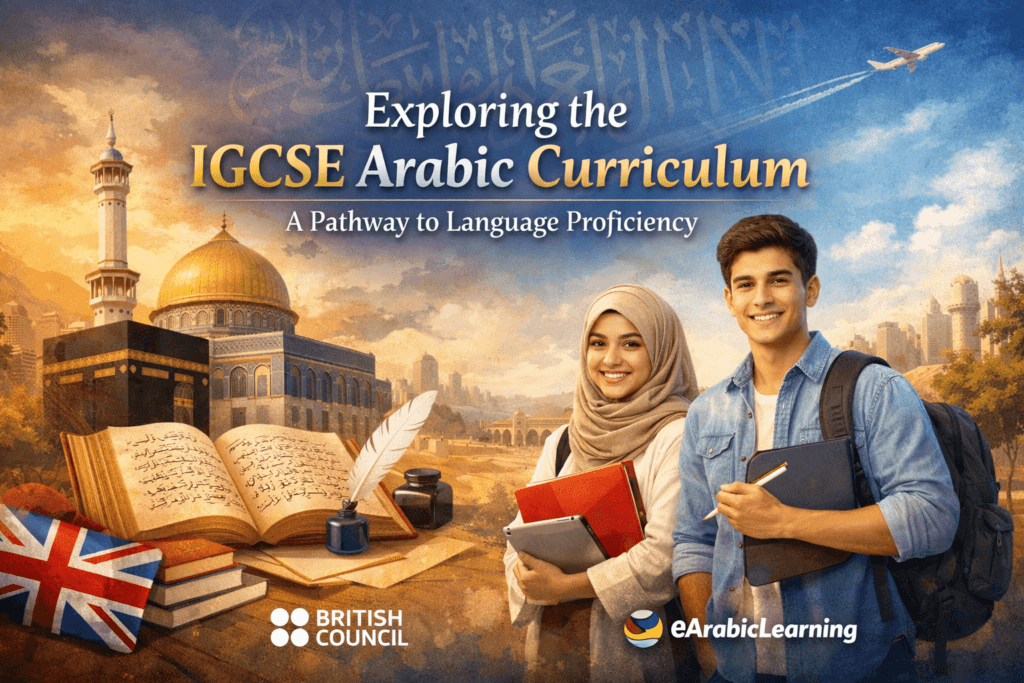
Exploring the IGCSE Arabic Curriculum: A Clear Pathway to Language Proficiency Are you looking for a structured, internationally recognized way to master Arabic while gaining deep cultural understanding? The Cambridge IGCSE Arabic curriculum offers exactly that—a well-designed academic pathway that builds real language proficiency and prepares learners for global opportunities. In this article, we explore
Exploring IGCSE Arabic Curriculum Read More »
Exploring Arabic Language Programs in the UK: A Comprehensive Guide Are you captivated by the allure of the Arabic language? Do you dream of unraveling the mysteries of ancient texts or engaging in conversations with native speakers? Look no further! In this article, we’ll embark on a journey through the vibrant landscape of Arabic language
Arabic Language Programs in the UK Read More »
Exploring Arabic Language Programs in the USA: A Comprehensive Guide cultural heritage of the Arab world while studying in the United States? This guide explores the best Arabic language programs in the USA, from top universities to online learning opportunities like eArabicLearning Academy. Why Learn Arabic? Arabic is more than just a language—it’s a bridge
Arabic Language Programs in the USA Read More »