Learn Classic Arabic

Deepen your knowledge of classical Arabic through grammar lessons, heritage texts, and advanced language usage.

🌾 100+ Beautiful Islamic Baby Girl Names with Meanings

Choosing a name for your baby girl is one of the most beautiful moments for any parent. In Islam, names carry deep meanings and reflect values, character, and spirituality. A good name is considered a blessing—and a gift that lasts a lifetime. In this article, you’ll find a collection of meaningful and elegant Islamic names

🌾 100+ Beautiful Islamic Baby Girl Names with Meanings Read More »

100+ Beautiful Islamic Baby Boy Names with Meanings🌙

Choosing the perfect name for your baby boy is a big decision—one that carries meaning, tradition, and hope for the future. In Islamic culture, names often hold deep spiritual and historical significance, inspired by the Qur’an, the Prophet Muhammad ï·ș, and the rich heritage of Islamic civilization. Whether you’re a parent-to-be, a teacher of Arabic,

100+ Beautiful Islamic Baby Boy Names with Meanings🌙 Read More »

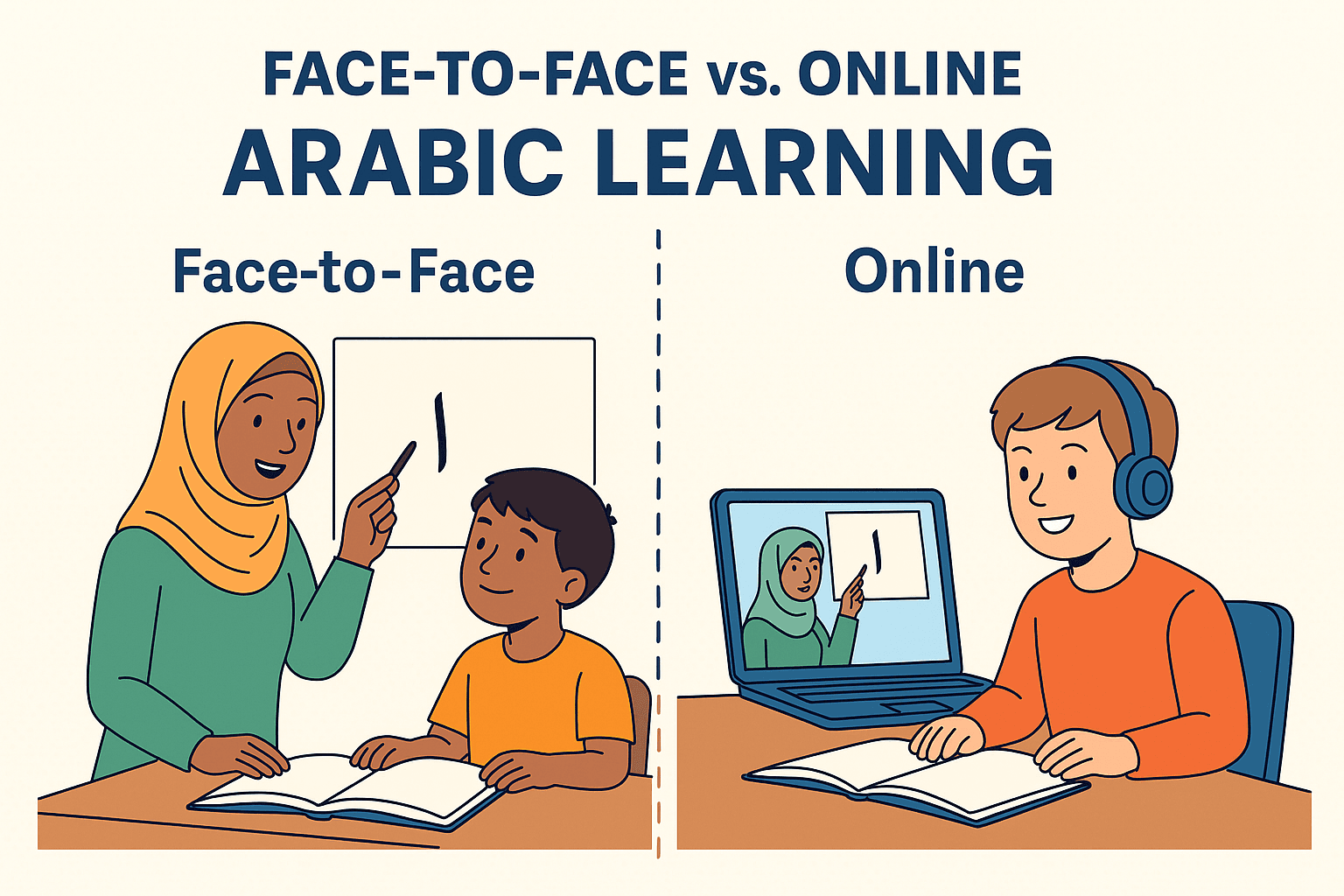
Face-to-Face vs. Online Arabic Learning: Pros, Cons, and the Best Choice for Children and Beginners

In today’s globalized world, learning a new language is more than just a school subject — it’s a bridge to culture, communication, and opportunity. For non-native speakers, especially children and absolute beginners, learning Arabic can be both exciting and challenging. But one major question always arises for parents and learners alike: Should we choose face-to-face

Face-to-Face vs. Online Arabic Learning: Pros, Cons, and the Best Choice for Children and Beginners Read More »

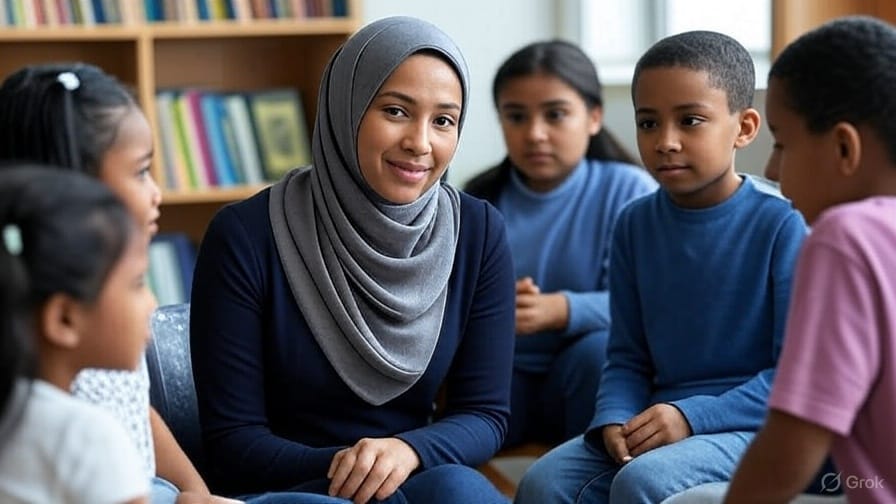
Unlocking Little Voices: Teaching Arabic Conversation to Children as a Second Language – Methods, Challenges, and Human-Centered Solutions

Imagine a five-year-old child, eyes sparkling with curiosity, whispering their first words in Arabic: “ŰŁŰ±ÙŠŰŻ Ù…Ű§ŰĄÙ‹” — “I want water.” In that moment, language is not grammar or syntax; it is connection. It’s the magical thread tying thought to expression, identity to community. Teaching Arabic conversation to children as a second language is not just

Unlocking Little Voices: Teaching Arabic Conversation to Children as a Second Language – Methods, Challenges, and Human-Centered Solutions Read More »

Essential Guide to Early Quran Memorization: Steps, Challenges, and Tips (Concise, engaging, and clear, while covering the core ideas.)

Why It’s Vital to Start Quran Memorization Early for Children – Steps, Challenges, and Smart Solutions Memorizing the Holy Quran is not just about committing sacred text to memory—it is a profound spiritual journey that shapes a child’s heart, mind, and identity. Starting this journey during childhood is not only ideal but incredibly effective. Young

Essential Guide to Early Quran Memorization: Steps, Challenges, and Tips (Concise, engaging, and clear, while covering the core ideas.) Read More »

Breaking Barriers: How to Speak Arabic Fluently as a Second Language

Overcoming Challenges in Learning Conversational Arabic as a Second Language Learning Arabic as a second language is a rewarding yet challenging journey, particularly when it comes to mastering conversational skills. For beginner and intermediate learners, developing fluency in spoken Arabic can feel daunting due to the language’s unique features and cultural nuances. This article explores

Breaking Barriers: How to Speak Arabic Fluently as a Second Language Read More »