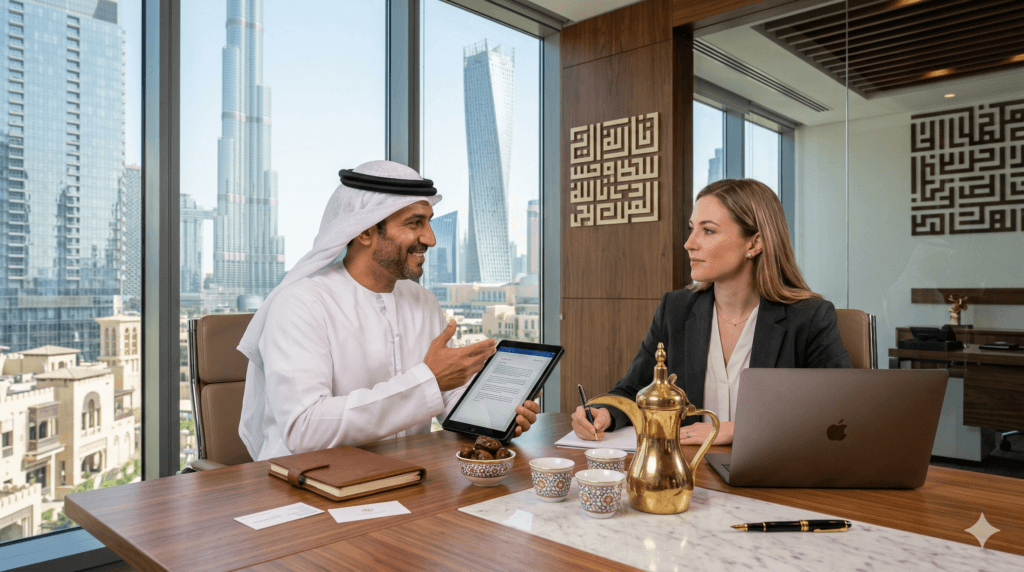
The Middle East is no longer just a “promising market”—it is a global powerhouse. From the futuristic skylines of Riyadh and Dubai to the historic trade hubs of Cairo and Amman, the region is a magnet for international talent and ambitious corporations.
But as many expats and business leaders soon discover, there is a vast difference between “doing business” in the Middle East and “building a legacy.” The bridge between those two? Language.
If you are preparing to relocate or expand your business to the Arab world, understanding the linguistic landscape isn’t just a “nice-to-have” skill—it’s your most valuable competitive advantage.
The “Arabic for Business” Edge: Beyond the Handshake
In Western business culture, meetings are often transactional: you enter, discuss the agenda, sign the contract, and leave. In the Middle East, business is deeply personal. It is built on the foundation of Tawasul (connection) and Thiqa (trust).
When you make the effort to learn Arabic before you step off the plane, you aren’t just learning words; you are signaling respect. You are telling your potential partners, “I value your culture enough to invest my time in it.” This simple gesture can open doors that no PowerPoint presentation ever could.
The Great Debate: Modern Standard Arabic (MSA) vs. Colloquial Dialects (Ammiya)
One of the first questions professionals ask is: “Which Arabic should I learn?” To succeed in business, you need to understand the harmony between the two.
1. Modern Standard Arabic (Fusha)
This is the formal language used in news, literature, legal contracts, and official speeches. In a business context, MSA is the language of your documentation. It’s what you’ll see in the “Terms and Conditions” and what you’ll hear in a formal keynote address.
The Benefit: It gives you an air of sophistication and professional authority.
2. The Dialects (Ammiya)
This is the language of the heart and the hallway. It’s what people speak over coffee, during lunch breaks, and in those crucial “informal” moments where the real decisions are often made. Whether it’s the Levantine, Gulf (Khaleeji), or Egyptian dialect, speaking the local “Ammiya” breaks the ice instantly.
The Benefit: It builds rapport, warmth, and genuine social bonds.
Our Business Arabic Course is specifically designed to bridge this gap, teaching you the professional polish of formal Arabic alongside the conversational ease needed for daily interactions.
Culture is the Currency of Success
You might have the best product in the world, but if you misunderstand the cultural nuances of the Middle East, your business might stall. Integration is the key to a fruitful professional life.
The Social Fabric of Business
In the Arab world, the line between social life and professional life is beautifully blurred. A “business lunch” is rarely just about business. It’s about family, history, and shared values. By understanding the language, you can participate in these conversations. You’ll understand the subtle art of the Majlis, the importance of hospitality (Karam), and the etiquette of negotiation.
Avoiding the “Expat Bubble”
Many professionals move to the Middle East and stay within “expat bubbles,” speaking only English. While you can survive this way, you will never truly thrive. Learning Arabic allows you to navigate the local bureaucracy, understand the local market sentiment firsthand, and build a network that isn’t limited to other foreigners.
Why Start Before You Travel?
Starting your journey with a structured course like Arabic for Business before you relocate gives you a “soft landing.”
Confidence: You won’t feel lost during your first week.
Immediate Impact: You can introduce yourself and greet your new team in their native tongue from day one.
Strategic Thinking: You’ll begin to see the market through a local lens, allowing for better strategic decision-making.
Conclusion: Your Journey Starts Here
The Middle East is a land of immense opportunity, but the key to unlocking that opportunity is held by those who speak the language of the people. Whether you are looking to close a multi-million dollar deal or simply want to build a meaningful life in a new country, Arabic is your gateway.
Ready to transform your career and your cultural experience? Explore our tailored Business Arabic Course today and start your journey toward becoming a truly global professional.
Frequently Asked Questions about Business Arabic
Q: Why is it important to learn Arabic before working in the Middle East? A: Learning Arabic is essential for building Thiqa (trust) with local partners. While many speak English, using Arabic demonstrates cultural respect, helps you navigate legal documents, and allows you to participate in the informal social “Majlis” where many business decisions are actually made.
Q: Should I learn Modern Standard Arabic (Fusha) or a local dialect for business? A: For a complete professional toolkit, a mix is best. Modern Standard Arabic (Fusha) is used for formal contracts, emails, and presentations. However, local dialects (Ammiya) are vital for rapport-building and daily social interactions. Our course integrates both to ensure you are effective in every setting.
Q: Can I do business in the Middle East using only English? A: You can survive with English, but you will likely remain in an “expat bubble.” Speaking Arabic allows you to understand market nuances, negotiate more effectively, and build deeper, long-term relationships that English-only speakers often miss.
Q: How long does it take to learn basic Business Arabic? A: With a focused “Arabic for Business” curriculum, most professionals can master essential greetings, introductions, and industry-specific vocabulary within 8 to 12 weeks of consistent study.